 Get This Document Online
Attorney-Approved Last Will and Testament Document
A Last Will and Testament is a legal document that outlines how an individual's assets and affairs will be handled after their death. It serves to ensure that one's wishes are honored and provides clarity for loved ones during a difficult time. To take the first step in securing your legacy, consider filling out the form by clicking the button below.
Article Structure
The Last Will and Testament form serves as a crucial legal document that outlines an individual's wishes regarding the distribution of their assets after death. This form typically includes several key components, such as the identification of the testator, the appointment of an executor, and the designation of beneficiaries who will inherit specific assets. Additionally, it may specify guardianship arrangements for minor children, ensuring their care is entrusted to a chosen individual. The form allows for the inclusion of specific bequests, which detail particular items or amounts of money to be given to designated individuals or organizations. Furthermore, it often contains provisions for the payment of debts and taxes, ensuring that the estate is settled according to the testator's wishes. By addressing these essential elements, the Last Will and Testament form provides clarity and direction, helping to minimize disputes and confusion among surviving family members and loved ones.
- Alabama
- Alaska
- Arizona
- Arkansas
- California
- Colorado
- Connecticut
- Delaware
- District of Columbia
- Florida
- Georgia
- Hawaii
- Idaho
- Illinois
- Indiana
- Iowa
- Kansas
- Kentucky
- Louisiana
- Maine
- Maryland
- Massachusetts
- Michigan
- Minnesota
- Mississippi
- Missouri
- Montana
- Nebraska
- Nevada
- New Hampshire
- New Jersey
- New Mexico
- New York
- North Carolina
- North Dakota
- Ohio
- Oklahoma
- Oregon
- Pennsylvania
- Rhode Island
- South Carolina
- South Dakota
- Tennessee
- Texas
- Utah
- Vermont
- Virginia
- Washington
- West Virginia
- Wisconsin
- Wyoming
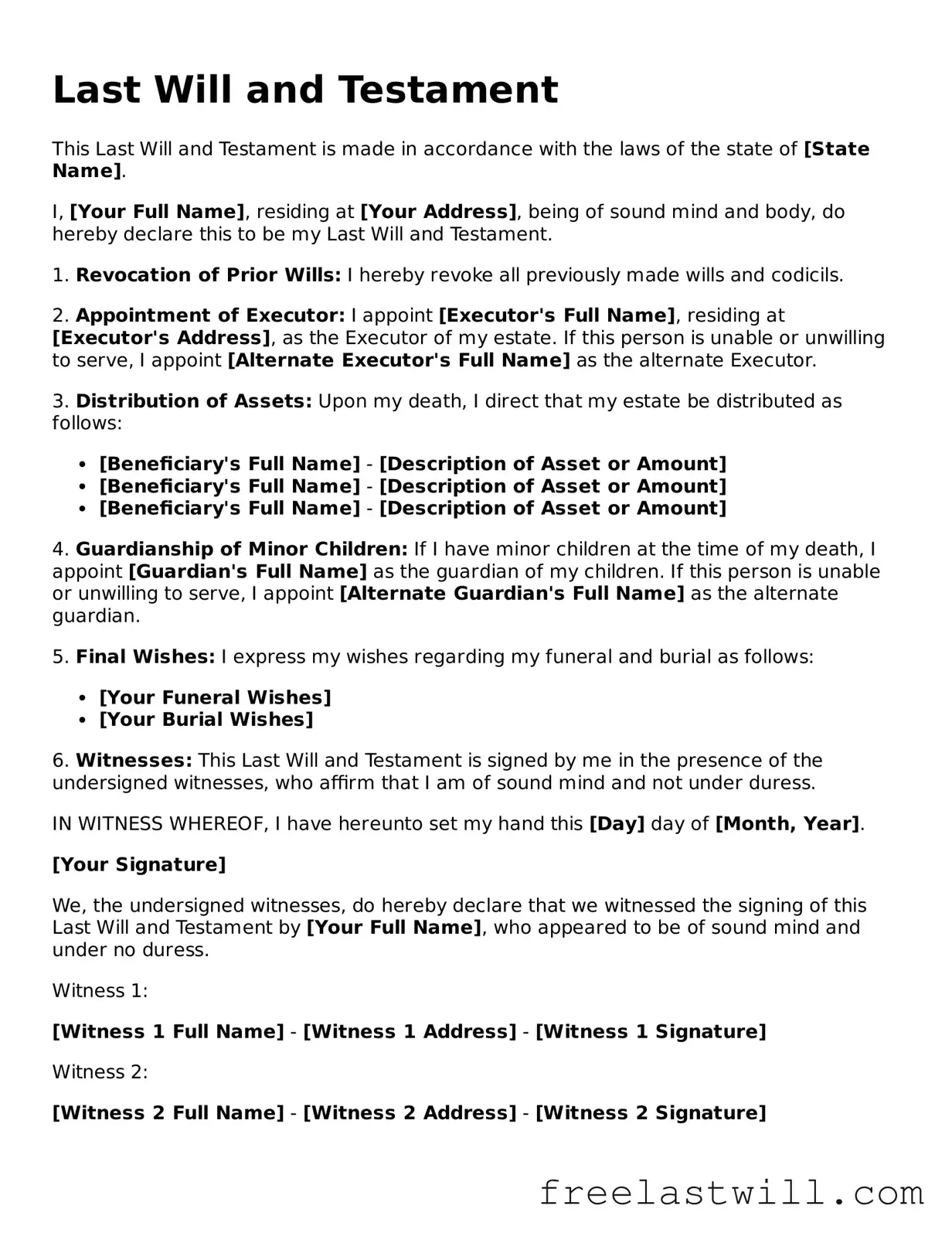
Document Preview
Last Will and Testament
This Last Will and Testament is made in accordance with the laws of the state of [State Name].
I, [Your Full Name], residing at [Your Address], being of sound mind and body, do hereby declare this to be my Last Will and Testament.
1. Revocation of Prior Wills: I hereby revoke all previously made wills and codicils.
2. Appointment of Executor: I appoint [Executor's Full Name], residing at [Executor's Address], as the Executor of my estate. If this person is unable or unwilling to serve, I appoint [Alternate Executor's Full Name] as the alternate Executor.
3. Distribution of Assets: Upon my death, I direct that my estate be distributed as follows:
- [Beneficiary's Full Name] - [Description of Asset or Amount]
- [Beneficiary's Full Name] - [Description of Asset or Amount]
- [Beneficiary's Full Name] - [Description of Asset or Amount]
4. Guardianship of Minor Children: If I have minor children at the time of my death, I appoint [Guardian's Full Name] as the guardian of my children. If this person is unable or unwilling to serve, I appoint [Alternate Guardian's Full Name] as the alternate guardian.
5. Final Wishes: I express my wishes regarding my funeral and burial as follows:
- [Your Funeral Wishes]
- [Your Burial Wishes]
6. Witnesses: This Last Will and Testament is signed by me in the presence of the undersigned witnesses, who affirm that I am of sound mind and not under duress.
IN WITNESS WHEREOF, I have hereunto set my hand this [Day] day of [Month, Year].
[Your Signature]
We, the undersigned witnesses, do hereby declare that we witnessed the signing of this Last Will and Testament by [Your Full Name], who appeared to be of sound mind and under no duress.
Witness 1:
[Witness 1 Full Name] - [Witness 1 Address] - [Witness 1 Signature]
Witness 2:
[Witness 2 Full Name] - [Witness 2 Address] - [Witness 2 Signature]
PDF Specifications
| Fact Name | Description |
|---|---|
| Definition | A Last Will and Testament is a legal document that outlines how a person's assets and affairs will be handled after their death. |
| Governing Law | The laws governing Wills vary by state. In the U.S., each state has its own probate code that regulates the creation and execution of Wills. |
| Requirements | Most states require the testator (the person making the Will) to be at least 18 years old and of sound mind. |
| Witnesses | Typically, a Will must be signed in the presence of at least two witnesses who are not beneficiaries. |
| Revocation | A Last Will can be revoked or amended at any time, as long as the testator is alive and mentally competent. |
| Executor | The Will designates an executor, who is responsible for carrying out the wishes outlined in the document. |
| Probate Process | After death, the Will usually goes through probate, a legal process to validate the Will and settle the estate. |
Instructions on Utilizing Last Will and Testament
Completing a Last Will and Testament form is an important step in ensuring your wishes are clearly outlined. After filling out the form, you will need to sign it in front of witnesses and possibly have it notarized, depending on your state’s requirements.
- Begin by entering your full legal name at the top of the form.
- Provide your current address, including city, state, and zip code.
- Clearly state that this document is your Last Will and Testament.
- Designate an executor. This person will carry out your wishes as outlined in the will.
- List your beneficiaries. Specify who will receive your assets and any specific items.
- Include any specific bequests. Detail any particular gifts you want to leave to individuals.
- Address any debts or obligations. Specify how you want these handled after your passing.
- Sign the document at the bottom. Ensure you do this in the presence of witnesses.
- Have at least two witnesses sign the document, confirming they saw you sign it.
- If required, have the document notarized for added legal validity.
More About Last Will and Testament
What is a Last Will and Testament?
A Last Will and Testament is a legal document that outlines how a person's assets and affairs will be managed after their death. It allows individuals to specify who will inherit their property, appoint guardians for minor children, and name an executor to carry out their wishes. Having a will ensures that your intentions are clear and can help avoid disputes among family members.
Why do I need a Last Will and Testament?
Creating a Last Will and Testament is essential for several reasons:
- Control Over Distribution: You can decide who receives your assets and in what proportions.
- Guardianship: If you have minor children, you can appoint someone you trust to care for them.
- Avoiding Intestacy: Without a will, state laws will determine how your assets are distributed, which may not align with your wishes.
- Reducing Family Conflict: A clear will can help prevent disputes among family members regarding your estate.
How do I create a Last Will and Testament?
Creating a Last Will and Testament involves several steps:
- Determine Your Assets: Make a list of your assets, including property, bank accounts, and personal belongings.
- Choose Beneficiaries: Decide who will inherit your assets and consider their needs and relationships with you.
- Appoint an Executor: Select someone you trust to ensure your wishes are followed. This person will manage your estate and handle any necessary legal processes.
- Draft the Will: You can use online templates, hire an attorney, or write it yourself, ensuring it meets your state’s legal requirements.
- Sign and Witness: Sign the will in front of witnesses, as required by your state, to make it legally binding.
Can I change my Last Will and Testament?
Yes, you can change your will at any time as long as you are of sound mind. To make changes, you can either create a new will or add a codicil, which is a document that modifies the existing will. It’s important to ensure that any changes comply with state laws and are properly signed and witnessed to remain valid.
What happens if I die without a Last Will and Testament?
If you pass away without a will, your estate will be considered "intestate." This means state laws will dictate how your assets are distributed, which may not reflect your wishes. Typically, your assets will go to your closest relatives, such as a spouse or children. However, this process can be lengthy and may lead to disputes among family members.
How often should I update my Last Will and Testament?
It’s advisable to review and potentially update your will every few years or after significant life events, such as:
- Marriage or divorce
- The birth or adoption of a child
- A significant change in financial status
- Changes in relationships with beneficiaries
Regularly updating your will helps ensure that it accurately reflects your current wishes and circumstances.
Common mistakes
-
Failing to clearly identify the testator. It’s essential to include your full name, address, and date of birth. Without this information, the will may be challenged.
-
Not signing the will. A will is only valid if it is signed by the testator. Forgetting this crucial step can render the document useless.
-
Overlooking witnesses. Most states require at least two witnesses to sign the will. If you skip this, your will might not hold up in court.
-
Using vague language. Be specific about your wishes. Ambiguity can lead to disputes among heirs and may cause delays in executing the will.
-
Not updating the will. Life changes such as marriage, divorce, or the birth of a child should prompt a review and possible revision of your will.
-
Neglecting to name an executor. An executor is responsible for carrying out your wishes. Failing to appoint one can lead to confusion and delays.
-
Leaving out important assets. Ensure all significant assets are included. This includes properties, bank accounts, and personal items.
-
Ignoring state laws. Each state has different requirements for wills. Familiarize yourself with your state’s laws to avoid invalidating your will.
-
Not discussing the will with family members. Open communication can prevent misunderstandings and disputes after your passing.
Documents used along the form
When preparing a Last Will and Testament, it is essential to consider other important documents that can complement or support your estate planning. These documents can help ensure that your wishes are honored and that your loved ones are cared for after your passing. Below is a list of common forms and documents that are often used alongside a Last Will and Testament.
- Living Will: This document outlines your preferences for medical treatment in case you become unable to communicate your wishes. It typically addresses end-of-life decisions and the types of life-sustaining treatments you would or would not want.
- Durable Power of Attorney: This form allows you to designate someone to make financial and legal decisions on your behalf if you become incapacitated. This person, known as your agent, can manage your affairs according to your wishes.
- Healthcare Power of Attorney: Similar to a durable power of attorney, this document specifically grants someone the authority to make healthcare decisions for you if you are unable to do so. It can provide clarity on your medical preferences.
- Trust Agreement: A trust can hold assets for the benefit of your beneficiaries, allowing for more control over how and when your assets are distributed. It can also help avoid probate, providing a smoother transfer of assets.
- Beneficiary Designations: Many financial accounts, such as retirement accounts and life insurance policies, allow you to name beneficiaries. These designations can supersede your will, so it’s crucial to keep them updated.
- Letter of Intent: While not a legally binding document, this letter can provide guidance to your executor or loved ones regarding your wishes for your estate, funeral arrangements, and any personal messages you want to convey.
- Guardianship Designation: If you have minor children, this document specifies who you wish to take care of them in the event of your death. It is vital to communicate your choice to the designated guardian.
- Asset Inventory: Creating a detailed list of your assets, including property, bank accounts, and personal belongings, can help your executor manage your estate more effectively and ensure nothing is overlooked.
- Funeral Arrangements Document: This document outlines your preferences for your funeral and burial or cremation. Including details about music, readings, and other personal touches can ease the burden on your loved ones.
Incorporating these documents into your estate planning can provide clarity and ensure that your wishes are respected. Each form serves a unique purpose and can significantly impact how your estate is managed after your passing. It is advisable to consult with a legal professional to ensure that your documents are properly drafted and executed, safeguarding your intentions for the future.
Similar forms
A Last Will and Testament is often compared to a Living Will, which outlines an individual's preferences regarding medical treatment in the event they become incapacitated. While a Last Will directs how assets should be distributed after death, a Living Will focuses on healthcare decisions. Both documents serve to express personal wishes and can ease the burden on loved ones by clarifying intentions. However, a Living Will is only effective during a person's lifetime, whereas a Last Will takes effect upon death.
Another similar document is the Durable Power of Attorney. This legal instrument allows a person to designate someone else to make financial or medical decisions on their behalf if they are unable to do so. Like a Last Will, it is a way to ensure that one’s wishes are respected. However, the Durable Power of Attorney is effective during a person's life and ceases to be valid upon their death, unlike a Last Will, which only comes into play after death.
The Revocable Trust is another document that shares similarities with a Last Will. A Revocable Trust allows a person to place their assets into a trust during their lifetime, with the ability to modify or revoke it as needed. This can help avoid probate, the legal process of distributing a person's estate after death. While both documents aim to manage the distribution of assets, a Revocable Trust can provide more privacy and flexibility during the individual’s lifetime.
Then there’s the Beneficiary Designation form, commonly used for life insurance policies and retirement accounts. This document allows individuals to specify who will receive benefits directly upon their death, bypassing the probate process entirely. Like a Last Will, it ensures that assets are distributed according to the individual's wishes, but it is limited to specific assets and does not cover the entire estate.
A Codicil is a legal document that amends an existing Last Will. It allows individuals to make changes without drafting a completely new will. Both documents must adhere to similar legal standards, such as being signed and witnessed properly. A Codicil can address changes in personal circumstances or preferences, keeping the original Last Will intact while updating specific provisions.
The Letter of Instruction is another document that complements a Last Will. While it does not hold legal weight, it provides guidance to the executor and loved ones regarding personal wishes, funeral arrangements, and asset distribution. This informal letter can clarify intentions and provide emotional comfort, making the process easier for those left behind, much like a Last Will aims to do.
Lastly, a Trust Declaration can be similar to a Last Will in that it outlines how a person's assets will be managed and distributed. This document creates a trust, which can be effective during the individual's lifetime and after death. While a Last Will typically goes through probate, a Trust Declaration often avoids this process, allowing for a more streamlined transfer of assets. Both documents are essential for estate planning, but they serve different purposes and mechanisms for asset distribution.
Dos and Don'ts
Creating a Last Will and Testament is an important step in ensuring your wishes are honored after your passing. Here are some essential dos and don'ts to consider when filling out this form:
- Do clearly state your full name and address to avoid any confusion.
- Do list all your assets and specify how you want them distributed.
- Do appoint a trustworthy executor who will carry out your wishes.
- Do sign the document in the presence of witnesses, as required by your state laws.
- Don't use vague language that could lead to misunderstandings.
- Don't forget to update your will after major life events, such as marriage or the birth of a child.
- Don't assume that verbal agreements will be honored; everything should be in writing.
- Don't leave out important details, like funeral arrangements or guardianship for minor children.
- Don't neglect to keep your will in a safe place and inform your executor of its location.
Following these guidelines can help ensure that your Last Will and Testament accurately reflects your wishes and is legally valid.
Misconceptions
Understanding the Last Will and Testament is crucial for anyone looking to plan their estate. However, several misconceptions can cloud this important document. Here are eight common myths, along with clarifications to help demystify the process.
-
A will only matters after you die.
This is not entirely true. While a will does take effect upon death, it can also guide decisions regarding your medical care and financial matters if you become incapacitated.
-
Only wealthy people need a will.
Everyone can benefit from having a will, regardless of their financial situation. A will ensures your wishes are honored and can simplify the process for your loved ones.
-
Wills are only for property distribution.
A will can also appoint guardians for minor children, name an executor to manage your estate, and specify funeral arrangements.
-
Once a will is written, it cannot be changed.
This misconception is false. You can update or revoke your will at any time, as long as you follow the legal requirements for doing so.
-
If I have a will, I don’t need any other estate planning documents.
A will is just one part of a comprehensive estate plan. Other documents, like trusts and powers of attorney, may also be necessary to cover various scenarios.
-
Wills are always contested.
While some wills do face challenges, many are executed without issue. Properly drafting and witnessing your will can reduce the likelihood of disputes.
-
You can write a will without legal help.
While it is possible to create a will on your own, consulting with a legal professional can help ensure that your will meets all legal requirements and accurately reflects your wishes.
-
All assets automatically go to my spouse if I die.
This assumption may not hold true. The distribution of assets depends on state laws and the specifics of your will, so it’s important to clarify your intentions in writing.
By addressing these misconceptions, individuals can better prepare for the future and ensure that their wishes are respected. Estate planning is a vital step in securing peace of mind for both you and your loved ones.
Key takeaways
When preparing a Last Will and Testament, it is important to understand the key elements involved in the process. Here are some essential takeaways to consider:
- Understand the Purpose: A Last Will and Testament outlines how you want your assets distributed after your death. It can also name guardians for minor children.
- Choose an Executor: Select a trusted individual to manage the distribution of your estate. This person will ensure that your wishes are carried out according to the will.
- Be Clear and Specific: Clearly describe your assets and how you wish them to be distributed. Ambiguity can lead to disputes among heirs.
- Sign and Date the Document: A will must be signed and dated to be valid. This action confirms your intent and authenticity.
- Witness Requirements: Most states require at least two witnesses to sign the will. They should not be beneficiaries to avoid conflicts of interest.
- Review Regularly: Life changes, such as marriage, divorce, or the birth of children, may necessitate updates to your will. Regular reviews can ensure it remains accurate.
- Store Safely: Keep the original document in a secure place, such as a safe or with an attorney. Inform your executor of its location.
- Consider Legal Assistance: While it is possible to create a will without legal help, consulting an attorney can provide guidance and ensure compliance with state laws.
These takeaways can help individuals navigate the process of creating a Last Will and Testament effectively, ensuring that their wishes are honored and that their loved ones are taken care of after their passing.
Attorney-Approved Last Will and Testament Document