Similar forms
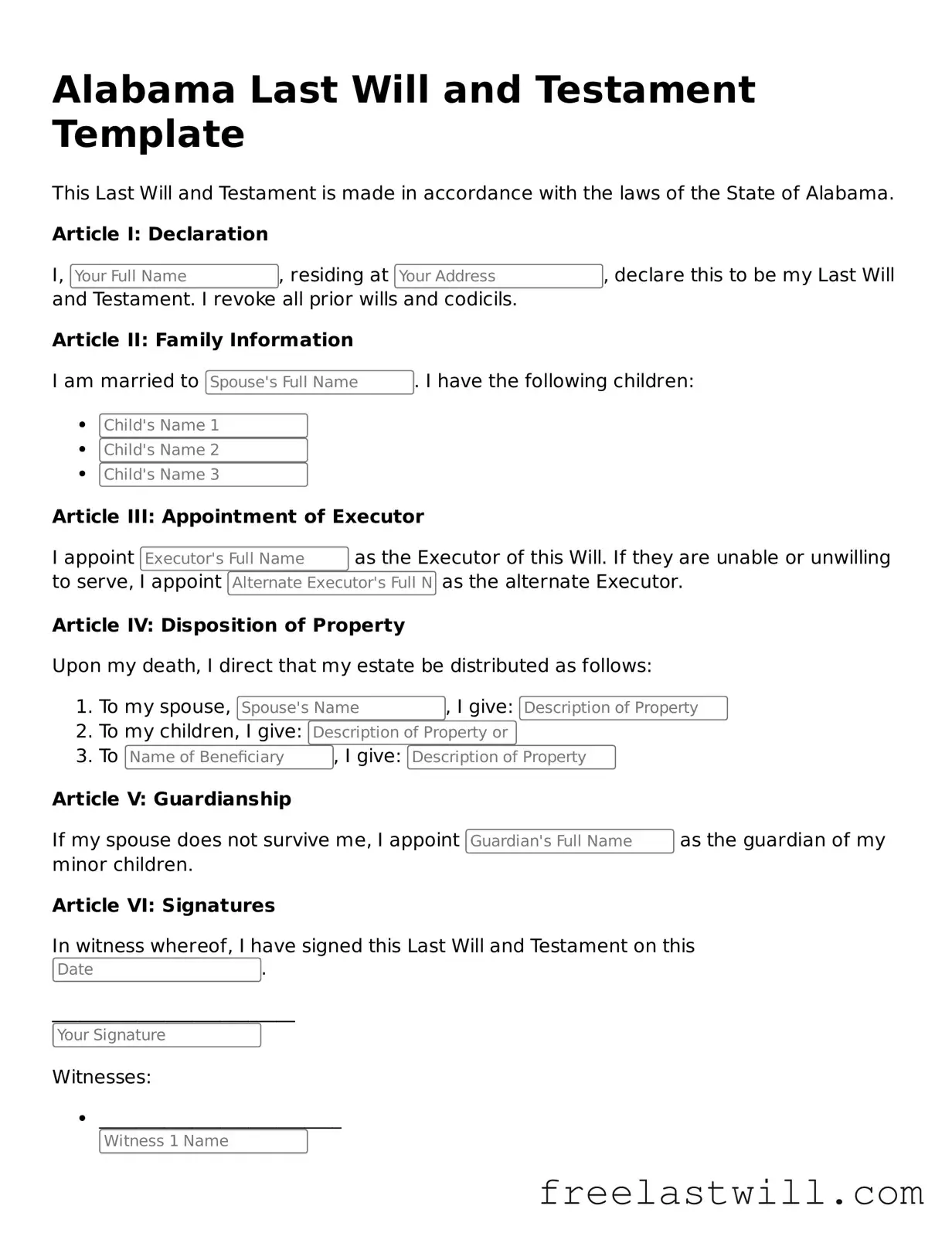
The Alabama Last Will and Testament form is similar to a Living Will. A Living Will outlines a person's preferences regarding medical treatment and end-of-life care. While a Last Will distributes assets after death, a Living Will provides guidance on healthcare decisions when an individual cannot communicate their wishes. Both documents serve to express an individual's desires, ensuring that their intentions are honored, whether in financial matters or health-related situations.
Another document similar to the Last Will is the Revocable Living Trust. This legal tool allows a person to place their assets into a trust during their lifetime. Unlike a Last Will, which goes into effect after death, a Revocable Living Trust can be managed while the individual is still alive. It provides a way to avoid probate, ensuring a smoother transition of assets to beneficiaries without court intervention.
The Durable Power of Attorney (DPOA) is also comparable to the Last Will. A DPOA designates someone to make financial or legal decisions on behalf of another person if they become incapacitated. While a Last Will takes effect after death, a DPOA is active during a person's life, allowing for immediate action when needed. Both documents are essential for ensuring that an individual's wishes are respected when they can no longer advocate for themselves.
The Healthcare Power of Attorney (HPOA) shares similarities with the Last Will as well. An HPOA appoints someone to make medical decisions on behalf of an individual if they are unable to do so. This document ensures that healthcare choices align with the individual's preferences, similar to how a Last Will ensures that their estate is handled according to their wishes. Both documents focus on protecting the individual's interests in critical situations.
A Codicil is another document related to the Last Will and Testament. A Codicil serves as an amendment to an existing will, allowing changes to be made without drafting an entirely new document. This can include updates to beneficiaries, asset distributions, or other specific provisions. Both a Last Will and a Codicil work together to reflect the current intentions of the individual regarding their estate.
Lastly, the Estate Plan is a broader document that encompasses the Last Will and Testament along with other components like trusts, powers of attorney, and healthcare directives. An Estate Plan provides a comprehensive strategy for managing an individual's assets during their lifetime and after death. While the Last Will focuses specifically on asset distribution, the Estate Plan includes all necessary documents to ensure that an individual's financial and healthcare wishes are met.