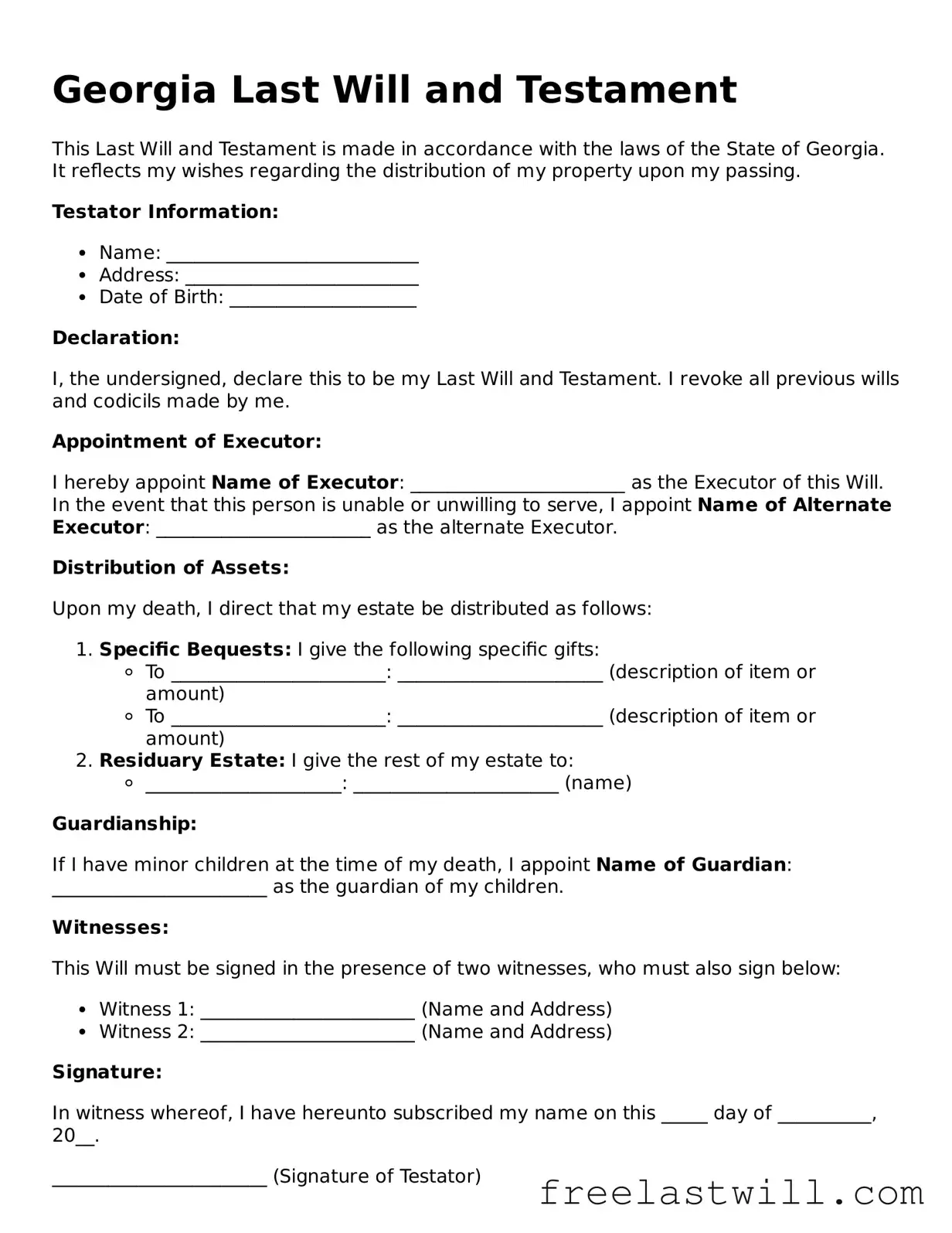
The Georgia Last Will and Testament form is similar to a Living Will. A Living Will outlines a person's wishes regarding medical treatment in case they become unable to communicate. While a Last Will deals with the distribution of assets after death, a Living Will focuses on healthcare decisions during life. Both documents reflect personal choices and intentions, but they serve different purposes in planning for the future.
Another document similar to the Georgia Last Will is a Trust. A Trust allows a person to transfer assets to a trustee, who will manage them for the benefit of the beneficiaries. Unlike a Last Will, which goes into effect after death, a Trust can be active during a person's lifetime. Both documents help in managing and distributing assets, but a Trust can provide more control and privacy over how assets are handled.
The Power of Attorney (POA) is another related document. A POA grants someone the authority to make decisions on behalf of another person. This can include financial decisions or healthcare choices. While a Last Will only takes effect after death, a POA is used during a person's lifetime. Both documents are essential for planning and ensuring that personal wishes are respected, but they serve different timeframes.
A Living Trust is also akin to the Last Will. A Living Trust is created during a person's lifetime and can be altered as needed. It allows for the transfer of assets without going through probate, which is a process that a Last Will typically requires. Both documents help in asset management and distribution, but a Living Trust can offer more immediate benefits while the individual is still alive.
The Advance Directive is another document that shares similarities. An Advance Directive combines a Living Will and a Healthcare Power of Attorney. It specifies a person's wishes for medical treatment and designates someone to make healthcare decisions if they cannot. While a Last Will focuses on asset distribution after death, an Advance Directive is concerned with medical choices during life. Both documents ensure that personal preferences are honored.
The Codicil is related to the Last Will as it serves as an amendment. If changes need to be made to an existing will, a Codicil can be used to update specific provisions without creating an entirely new document. This allows for flexibility in estate planning while maintaining the original will's overall structure. Both documents are essential for ensuring that a person's final wishes are accurately reflected.
The Letter of Intent is another document that can complement a Last Will. This informal document provides guidance to the executor of the will regarding the deceased's wishes. It can include details about funeral arrangements, asset distribution preferences, or personal messages to loved ones. While not legally binding, a Letter of Intent can clarify intentions and provide emotional closure, similar to how a Last Will outlines final wishes.
Lastly, a Testamentary Trust is akin to a Last Will as it is established through a will and takes effect upon the testator's death. This type of trust allows for the management of assets for beneficiaries, especially minors or individuals who may not be able to manage their inheritance. Both documents serve to ensure that assets are distributed according to the deceased's wishes, but a Testamentary Trust provides a structured way to manage those assets over time.