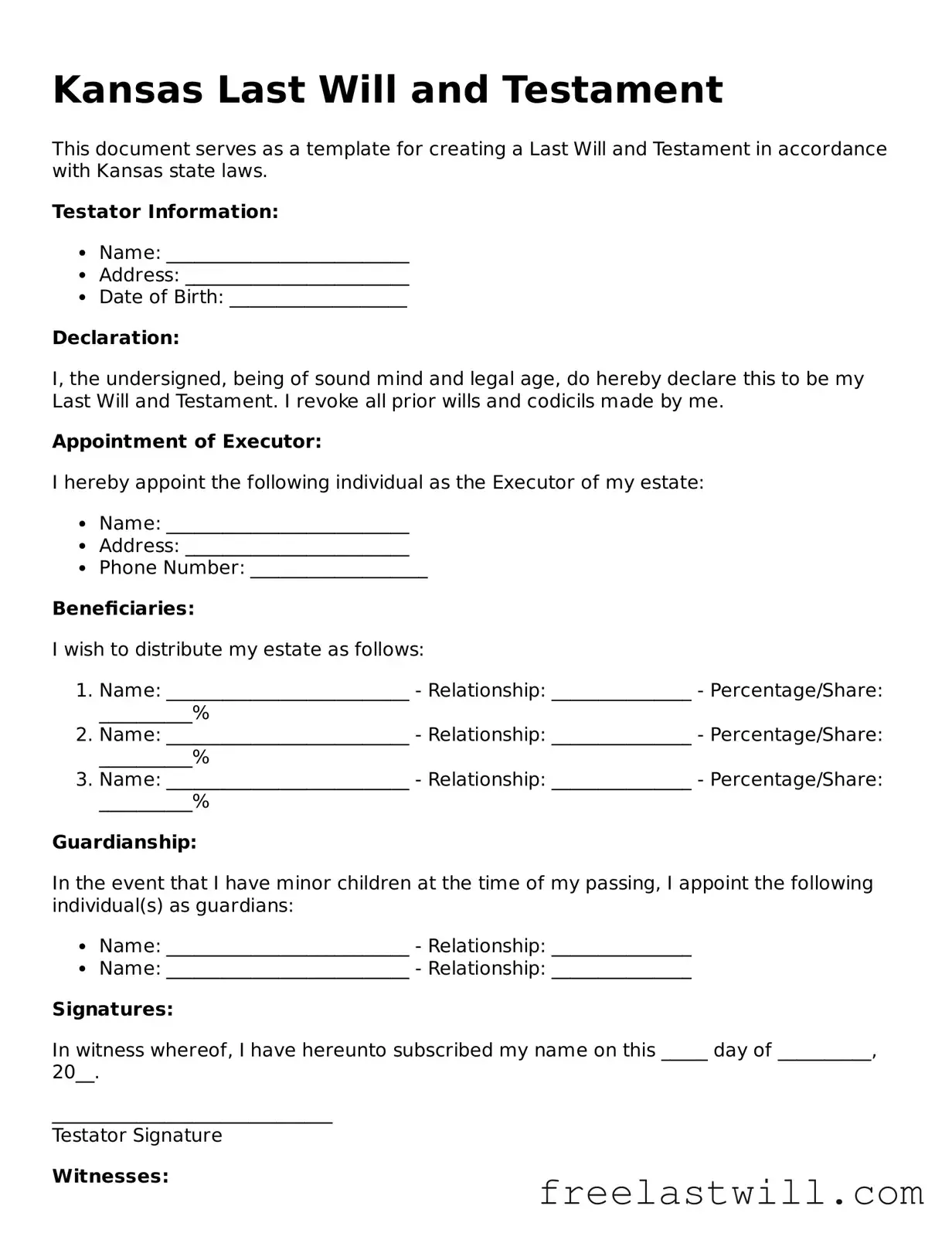
Instructions on Utilizing Kansas Last Will and Testament
Filling out the Kansas Last Will and Testament form is an important step in ensuring that your wishes are carried out after your passing. Once you have completed the form, you will need to sign it in front of witnesses and possibly a notary, depending on your specific needs. This process helps ensure that your will is valid and legally binding.
- Begin by obtaining the Kansas Last Will and Testament form. You can find it online or at a local legal office.
- At the top of the form, write your full name and address. Make sure this information is accurate, as it identifies you as the testator.
- Next, state that this document is your last will and testament. You can include a declaration that revokes any previous wills.
- Designate an executor. This person will be responsible for ensuring that your wishes are followed. Write their full name and address.
- List your beneficiaries. Include the names and addresses of the individuals or organizations you wish to inherit your assets.
- Clearly outline how you want your assets distributed among your beneficiaries. Be specific about who gets what.
- If you have minor children, designate a guardian for them. Write down the guardian's name and address.
- Include any specific requests, such as funeral arrangements or personal messages to loved ones.
- At the bottom of the form, leave space for your signature. Sign the document in the presence of witnesses.
- Have at least two witnesses sign the document, confirming that they witnessed you signing it. They should also include their addresses.
- If desired, take the signed will to a notary public for notarization. This step can add an extra layer of validation.