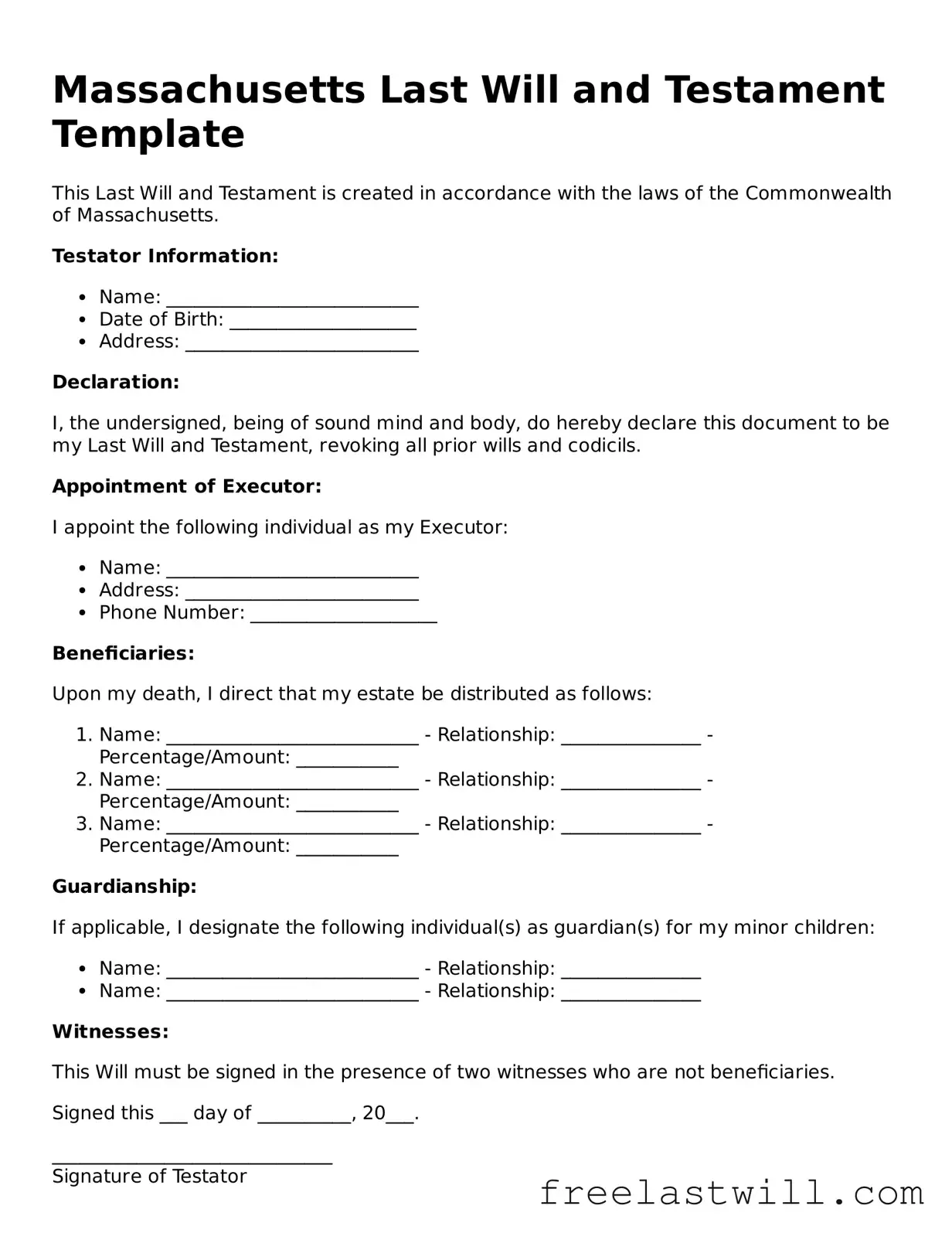
Instructions on Utilizing Massachusetts Last Will and Testament
Filling out the Massachusetts Last Will and Testament form is an important step in ensuring that your wishes regarding the distribution of your assets are honored after your passing. It is crucial to approach this process carefully, as it will have lasting implications for your loved ones and your estate.
- Begin by obtaining the Massachusetts Last Will and Testament form. You can find it online or request a physical copy from a legal office.
- At the top of the form, enter your full name and address. Make sure this information is accurate and up to date.
- Next, clearly state that this document is your Last Will and Testament. This helps to avoid any confusion later on.
- Designate an executor. This is the person who will be responsible for carrying out the terms of your will. Provide their full name and contact information.
- Identify your beneficiaries. List the names of the individuals or organizations who will inherit your assets. Be specific about what each person will receive.
- Include any specific bequests. If you wish to leave particular items to certain individuals, detail those items and the recipients clearly.
- Address the distribution of the remainder of your estate. Specify how any remaining assets should be divided among your beneficiaries.
- Sign and date the form at the designated area. This step is critical, as your signature validates the document.
- Have the will witnessed. In Massachusetts, you need at least two witnesses who are not beneficiaries. They should sign the document in your presence.
- Consider having the will notarized. While not required, notarization can add an extra layer of authenticity and may help in the probate process.
After completing the form, keep it in a safe place. Inform your executor and trusted family members about its location. Regularly review and update your will as necessary to reflect any changes in your life circumstances or wishes.