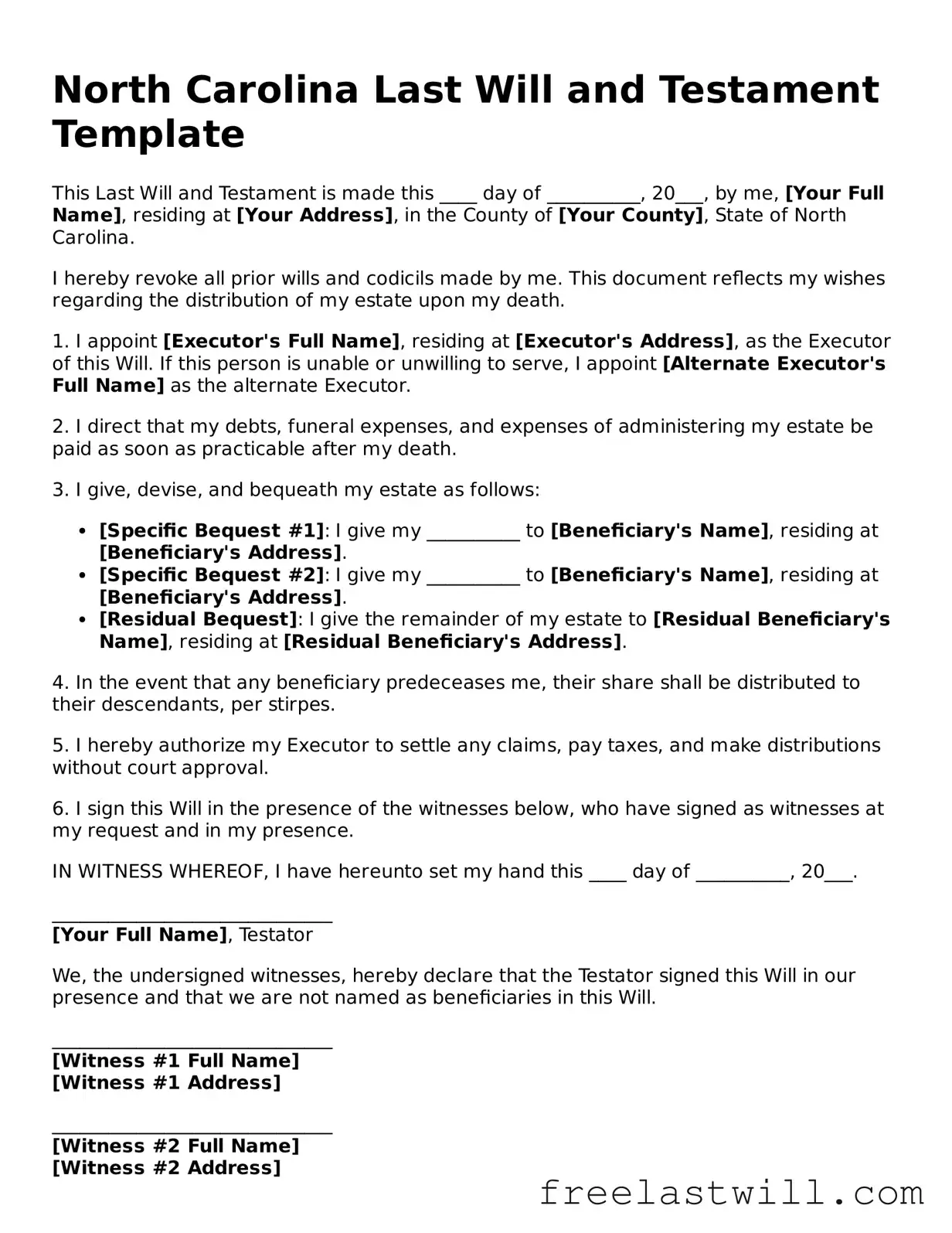
Instructions on Utilizing North Carolina Last Will and Testament
Creating a Last Will and Testament is an important step in ensuring your wishes are respected after your passing. Once you have completed the form, it will need to be signed and witnessed according to North Carolina law. This will help ensure that your will is valid and can be executed smoothly.
- Obtain the Form: Start by downloading or acquiring the North Carolina Last Will and Testament form. You can find it online or at a local legal office.
- Title the Document: At the top of the form, clearly write "Last Will and Testament."
- Personal Information: Fill in your full name, address, and date of birth. This identifies you as the testator.
- Revocation Clause: If you have previous wills, state that this document revokes all prior wills and codicils.
- Executor Appointment: Choose an executor who will carry out your wishes. Write their name and contact information.
- Beneficiaries: List the individuals or organizations you wish to inherit your assets. Be specific about what each person will receive.
- Guardianship: If you have minor children, designate a guardian to care for them. Include their name and relationship to you.
- Sign the Document: Sign and date the will at the bottom of the form. This indicates your agreement to the contents.
- Witnesses: Have at least two witnesses sign the document. They should also include their addresses. Ensure they are not beneficiaries.
- Store Safely: Keep the completed will in a safe place, such as a safe deposit box or with a trusted attorney.